 EN
 Deutsch
 Español
 Français
 Português
 Română
50 Positive Affirmations for Women at Any Age
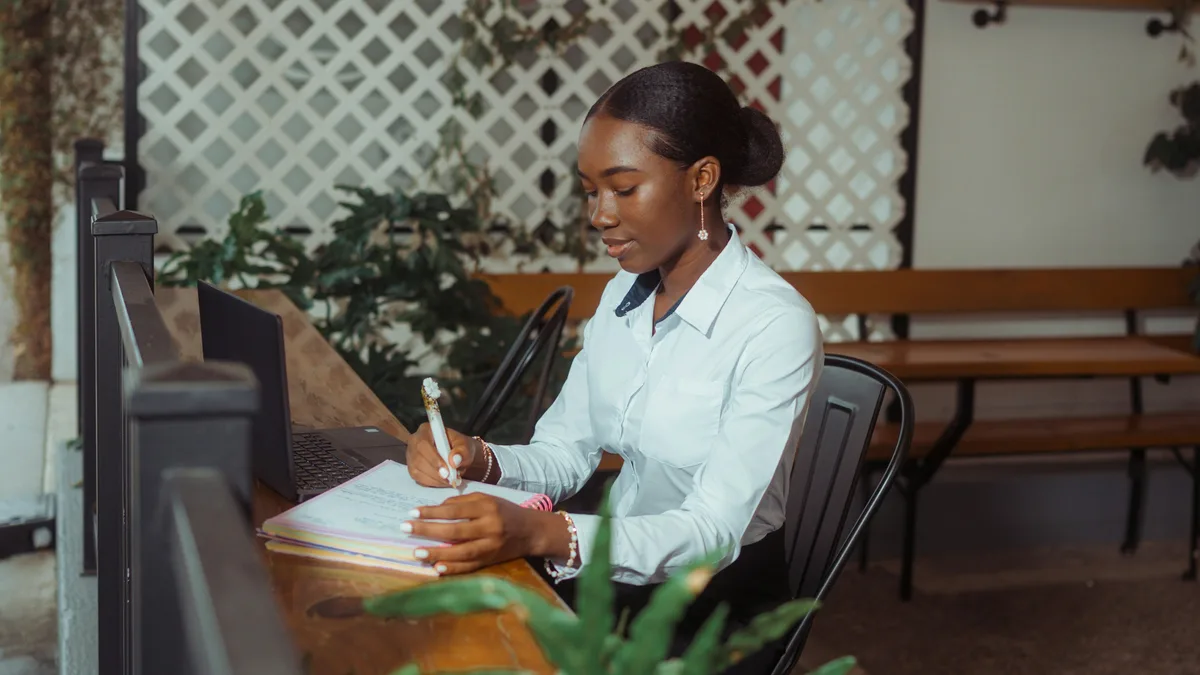
Positive affirmations for women are short first-person sentences about situations that come up in many women’s lives, like speaking up at work, saying no without guilt, a body that changes or caring for others. They help most when they feel true, or almost true, on an ordinary day. Below are 50 positive affirmations for women, sorted by situation, plus what research says about when affirmations help and when they backfire.
What are positive affirmations for women?
A positive affirmation is a short, kind sentence about yourself that you say or write on purpose, like “I can take up space in this meeting.” Affirmations for women work the same way as any other affirmation. The difference is the situations they’re written for: being the only woman in the room, pregnancy, menopause, looking after kids or aging parents, starting over after a divorce.
These sentences aren’t only for women, and not every woman will need all of them. Read the lists and keep the two or three that sound like your life right now.
What research says about affirmations for women
Research on self-esteem shows a gap between men and women, and one type of affirmation has been tested on that gap directly.
- A self-esteem gap in many countries. In a 2016 study with 985,937 people in 48 countries, Wiebke Bleidorn and colleagues found that men reported higher self-esteem than women. The gap showed up across countries, but its size varied from one culture to another.
- A small gap in self-compassion. A 2015 meta-analysis by Lisa Yarnell, Kristin Neff and colleagues combined 71 studies and found that men were slightly more self-compassionate than women. The authors called the difference small and warned against overstating it.
- Writing about your values helped women in a physics class. In a 2010 study published in Science, Akira Miyake and colleagues worked with 399 students in an introductory physics course at the University of Colorado. Students chosen at random wrote twice, at the start of the term, about the values that mattered most to them. In that group, the gap between men’s and women’s results shrank a lot, and women’s most common grade rose from the C range to the B range.
The Miyake study tested writing about your values, not repeating a sentence. Repetition has a weaker record. In a 2009 study, people with low self-esteem felt worse after repeating “I’m a lovable person”. That’s why the sentences below stay close to what you can believe. Our article on whether affirmations work covers more studies.
Positive affirmations for women at work
The term “impostor phenomenon” comes from a 1978 paper by Pauline Clance and Suzanne Imes about successful women who believed they weren’t as capable as others thought. Later research looked beyond women. A 2020 review of 62 studies with 14,161 participants found impostor feelings common among both men and women. These sentences are for the days you feel like an impostor anyway:
- I earned my place here.
- My ideas deserve to be heard.
- I can ask for a raise without apologizing.
- I don’t have to know everything to be good at my job.
- I can say thank you when someone praises my work.
- Asking a question doesn’t make me look less capable.
- I can finish a sentence even when someone talks over me.
- I’m allowed to take credit for what I did.
- One mistake doesn’t cancel my experience.
- I can do good work and still go home on time.
Positive affirmations for saying no without guilt
- I can say no without a long explanation.
- Someone else’s disappointment isn’t an emergency.
- I don’t have to be liked by everyone.
- Rest is part of my week, not a reward for finishing everything.
- I can change my plans when I’m tired.
- My needs count as much as anyone else’s.
- I’m allowed to ask for help before I’m exhausted.
- I can be kind and still have limits.
- Not every favor has to come from me.
- A quiet evening is a good enough plan.
For more sentences about boundaries, mistakes and hard days, see our self-love affirmations.
Positive affirmations for your body as it changes
- My body is allowed to change.
- I can rest when my period makes me tired.
- My body is doing a lot of work right now.
- I can be proud of what my body has carried me through.
- I don’t have to get my old body back.
- I can wear what feels comfortable today.
- Hot flashes are uncomfortable, and I can be patient with myself.
- Getting older isn’t something I have to hide.
- I can listen to my body instead of fighting it.
- My body deserves care at every age.
If your period, pregnancy or menopause makes daily life hard, talk to your doctor about what can help.
Positive affirmations for mothers and women who care for others
- I’m a good mother even on the days I lose my patience.
- I don’t have to do everything for my kids to be loved by them.
- I can love my family and still miss time alone.
- Asking for help is part of taking care of them.
- I’m allowed to take a break from caring for my parents.
- I can be tired and still be doing a good job.
- My worth isn’t measured by how much I do for others.
- I can let some things wait until tomorrow.
- Taking care of myself doesn’t take anything away from them.
- Some days, getting everyone fed is enough.
If you feel sad, empty or anxious most days after having a baby, talk to your doctor or midwife. If you’re in crisis or thinking about hurting yourself, call or text 988 in the US to reach the 988 Suicide & Crisis Lifeline, which is free and open around the clock.
Positive affirmations for women starting over at any age
- I’m allowed to start over at any age.
- My life doesn’t have to look the way I planned.
- I can build something new after a divorce.
- I’m allowed to want new things at this age.
- It’s not too late to learn something I’ve always wanted to learn.
- I can be scared and still make the change.
- The years behind me taught me things I can use now.
- I can make friends at any age.
- I don’t need anyone’s permission to change my life.
- I can take this one step at a time.
How to use these positive affirmations for women
- Pick one sentence. Choose the one that feels closest to what you need this week.
- Check if you believe it. If a voice in your head says “that’s not true”, make the sentence smaller with “I’m learning to” or “I can”. Our guide on how to write affirmations shows how to adjust a sentence until it fits.
- Tie it to something you already do. Say it while the coffee is brewing or before you open your work email. Our morning affirmations show how to build this kind of routine.
- Write about what matters to you once in a while. Take five minutes to write about a value that’s important to you, like family, honesty or learning, and why. This is close to the exercise from the Miyake study.
- Use the sentence for a week. Then keep it, change it or pick a new one.
For 100 sentences about sleep, calm, friendship and more, see our list of positive affirmations.
We built Graceup as a gratitude journal, and it also has more than 2,500 affirmations in 19 categories, including Confidence, Self-love and Body and Health. You can save the sentences that feel true to you, write your own and set a daily affirmation reminder.
Frequently asked questions
What is a good positive affirmation for a woman?
A good one is short, in the first person and believable on an ordinary day, like "I can ask for what I need." If you argue with the sentence as soon as you say it, make it smaller: "I'm learning to ask for what I need."
Do affirmations work for women?
Some do, under the right conditions. In a 2010 study in a college physics course, women who wrote twice about the values that mattered most to them closed much of the grade gap with men. In a 2009 study, people with low self-esteem felt worse after repeating "I'm a lovable person."
What is a powerful affirmation for a woman?
No sentence is powerful for everyone. The one that helps is the one you can say without a voice in your head saying "that's not true", for example "I don't have to be perfect to be good at this."
What are good affirmations for women at work?
Sentences about speaking up, asking for more and accepting praise tend to fit work, like "My ideas deserve to be heard" or "I can say thank you when someone praises my work." Say one before a meeting or a hard email.
Are there affirmations for women over 50?
Yes. Sentences about change and starting over fit any age, like "I'm allowed to want new things at this age" or "My body has changed, and it still deserves care." Pick the ones that match your life now.
Can affirmations help with impostor syndrome?
They may make your inner voice a little kinder, but we haven't found a study that tested them as a treatment. A 2020 review of 62 studies on impostor syndrome found no published research on any treatment for it.
How often should I say positive affirmations?
We haven't found a study that gives an ideal number. One sentence you say every day at the same moment, like when you make coffee, is easier to keep than a long list.
Can affirmations replace therapy?
No. They can help on an ordinary hard day, but they don't treat depression, anxiety or postpartum depression. If you feel low most days, talk to your doctor or a mental health professional.

I'm Eric, and I want to help make the world a better place. Studies show that people who make gratitude a habit are happier, sleep better and are kinder to the people around them. I built Graceup so this habit is within anyone's reach.